
NXP BZX84-A3V9: A Comprehensive Technical Overview of the 9V Zener Diode
The BZX84-A3V9 from NXP Semiconductors is a fundamental surface-mount Zener diode engineered to provide a precise and stable 9.1V reference voltage. As a member of the ubiquitous BZX84 series, this component is a cornerstone in countless electronic circuits where voltage regulation and protection are paramount. Its miniature SOT-23 package makes it an ideal choice for modern, space-constrained PCB designs, from consumer electronics to industrial control systems.
The primary function of the BZX84-A3V9 is to maintain a constant voltage across its terminals when operated in its reverse-biased breakdown region. Its nominal Zener voltage (Vz) is 9.1V at a specified test current (Izt) of 5mA. This specific voltage makes it exceptionally useful for protecting sensitive ICs and transistors from overvoltage transients, particularly in 9V or 12V power lines, and for creating stable voltage references for low-power analog circuits.
A key parameter for any Zener diode is its voltage tolerance, which for the 'A' tolerance suffix is ±5%. This means the actual breakdown voltage for any given diode can vary between approximately 8.6V and 9.6V. For applications demanding higher precision, closer tolerance versions (e.g., 'B' at ±2% or 'C' at ±1%) are available within the same series. The component's ability to handle power is defined by its maximum power dissipation of 350mW at an ambient temperature of 50°C. This rating dictates the maximum reverse current the diode can sustain without damage, calculated using the formula P = Vz Izt. For the 9.1V diode, this equates to a maximum current of around 38mA.
The performance of the BZX84-A3V9 is intrinsically linked to temperature, characterized by its Zener voltage temperature coefficient (T.C.). For Zener voltages around 5V, the T.C. changes sign. The 9.1V rating of this diode results in a positive temperature coefficient, typically around +5mV/°C. This implies that as the junction temperature increases, the Zener voltage also increases slightly. Designers must account for this drift in precision applications where thermal environments vary.
Furthermore, the diode's dynamic impedance (Zzt), typically 20 ohms at 5mA, is a critical factor for noise and regulation performance. A lower impedance signifies that the voltage across the diode remains more stable with changes in operating current, leading to better regulation. This parameter is vital for circuits subject to fluctuating load conditions.
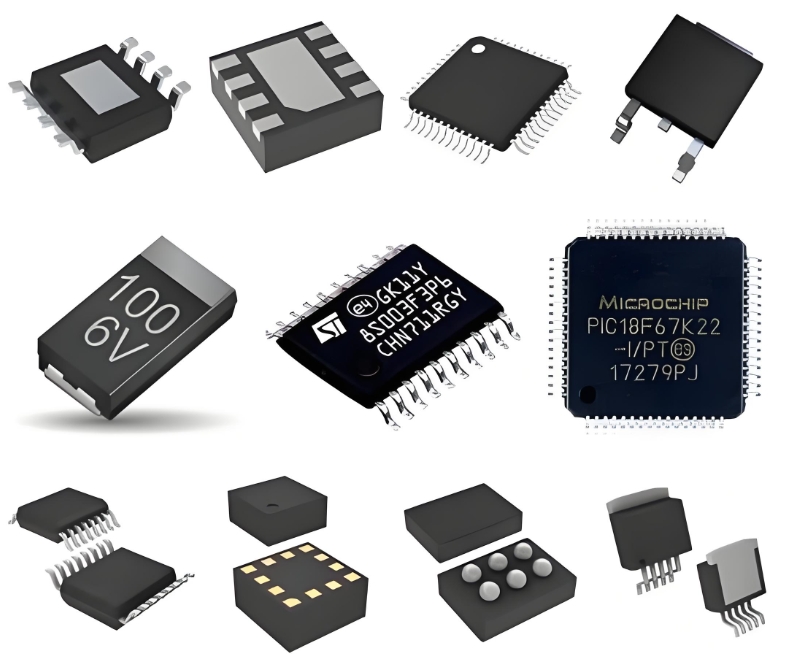
In practice, the BZX84-A3V9 is most commonly deployed in two key roles:
1. Voltage Regulation: It is used as a shunt regulator in low-current power supplies to clamp the output voltage to a stable 9.1V.
2. Overvoltage Protection: It is placed in parallel with a sensitive component, such as a MOSFET gate or an input pin of an IC, to shunt any damaging voltage spikes above its breakdown threshold to ground, thereby protecting the downstream circuitry.
ICGOOODFIND:
The NXP BZX84-A3V9 stands out as a highly reliable and efficient solution for 9V-level voltage clamping and regulation. Its excellent balance of a stable breakdown voltage, compact form factor, and robust performance under a variety of conditions makes it an indispensable component for engineers designing protection circuits and voltage references. When selecting this diode, careful consideration of its power dissipation limits, temperature coefficient, and tolerance is essential for ensuring optimal and reliable circuit operation.
Keywords:
Zener Voltage, Voltage Regulation, Overvoltage Protection, SOT-23, Dynamic Impedance

